Kingston & St. Andrew
Buy crypto in Kingston
Everything that decides how crypto works in Jamaica is written within a few kilometres of Half Way Tree — the central bank, the securities regulator, the tax authority and the stock exchange. So is most of the country's peer-to-peer order flow. That combination makes Kingston the easiest place on the island to do this well.
- Metro population≈1.2 million
- Crypto ATMs0
- P2P liquidityDeepest in Jamaica
- Licensed local exchangeNone
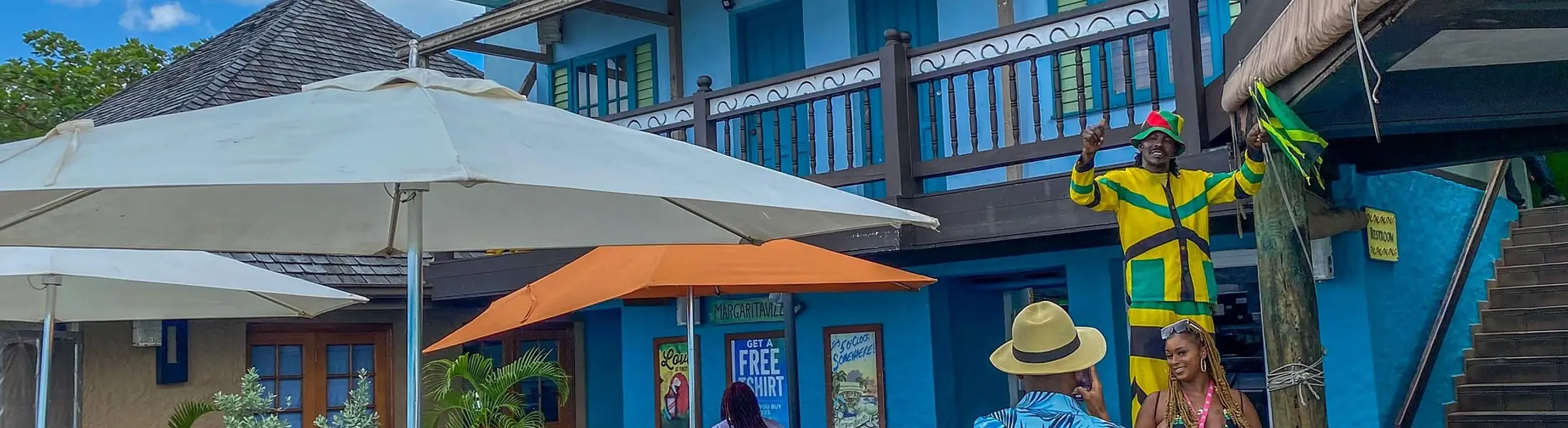
Why Kingston is genuinely different from everywhere else
Roughly 1.2 million people live in the Kingston Metropolitan Area once you count Kingston and St. Andrew together, which is close to half the country in an area you can cross in forty minutes on a good day. That concentration does three things to the practical business of buying crypto, and none of them applies in the same way anywhere else in Jamaica.
The first is banking density. From New Kingston, Half Way Tree, Cross Roads or the downtown waterfront you are a few minutes from a branch of NCB, Scotiabank, JN Bank or Sagicor. That matters more than it sounds, because the single most reliable cash-to-crypto route in Jamaica starts with depositing notes at your own branch. In St. Thomas that is a half-day expedition. In Kingston it is a lunch break.
The second is the counterparty pool. Peer-to-peer boards work on the same logic as any market: the more participants in one place, the tighter the spreads and the faster the fills. Kingston has the professional population, the university crowd around Mona and Papine, and the outsourcing and finance workforce — which is why a JMD peer-to-peer trade that might sit unfilled for hours elsewhere often completes here in fifteen minutes.
The third is information. Kingston is where the conversation happens — where the accountants who understand the tax position practise, where the lawyers who read the VASP consultation work, and where the FSC's own public education efforts land first. If you want a professional opinion on your specific circumstances rather than a website's general one, this is the city where you can actually get one.
The three routes that work in Kingston, ranked
Kingston is the only Jamaican market where all three mainstream routes are genuinely practical at the same time. That is a luxury, and it means the choice comes down to arithmetic rather than availability.
Route one, and the default: a local card on a licensed exchange. Ten minutes, no counterparty, works at two in the morning from Barbican or Liguanea. You pay the exchange's card fee plus your bank's conversion margin, so budget three to five per cent all in. For a first purchase, or for anything under roughly J$150,000, this is what we would do and what we recommend without qualification.
Route two, for size: peer-to-peer with a local bank transfer. Half a per cent to one and a half, because nobody converts currency — the trader takes Jamaican dollars into a Jamaican account. Kingston is where this route actually delivers on its promise, because the traders are here. Above about J$250,000 the saving becomes real money and the wait is short. Read the P2P playbook before your first trade, not after.
Route three, for large amounts: fund in USD and use the order book. An outbound wire from a Kingston bank costs the same fixed chain of fees as it does anywhere, which makes it poor value below about J$500,000 and excellent above it. Kingston's advantage here is soft but real: you can walk into a branch and have a conversation with someone about the wire before you send it, which prevents most of the problems that arise.
The Kingston-specific shortcut
Because branches are everywhere here, the cash problem that dominates the rest of the island barely exists. If you are holding notes, deposit them at your own branch on the way to work and buy from your desk. That is the whole solution, and it is cheaper and safer than anything involving meeting someone at a plaza.
Bitcoin ATM Kingston: the answer is zero
"Bitcoin ATM Kingston" is one of the most searched crypto phrases in Jamaica and there is nothing to find. No machine exists in Kingston, in New Kingston, at Half Way Tree, downtown, at Sovereign Centre, at any Shell or Total forecourt, or in the arrivals hall at Norman Manley International. Public machine registries list zero installations for Jamaica as a country.
What you will find instead falls into three buckets. Programmatic city pages published by international operators who have no machine here but rank for the phrase and then offer an online service. Ordinary bank ATMs mislabelled in map data. And private individuals who describe themselves in ways designed to be mistaken for a service, and who want to meet you somewhere with cash.
The reason no machine exists is regulatory rather than commercial. A kiosk that takes banknotes and sells digital value is doing something adjacent to money transfer, which the Bank of Jamaica already licenses and inspects, and there is currently no licence category that fits crypto. Our full Bitcoin ATM investigation works through the regulation, the economics and what a machine would charge if one arrived — which, for the record, would be far more than your card.
Bitcoin OTC in New Kingston: what actually exists
If there is a place in Jamaica where a crypto OTC market operates, it is the few blocks around Knutsford Boulevard and Trafalgar Road. We looked hard, and here is the honest finding: no licensed crypto OTC desk has a Kingston office, because no Jamaican licence for the activity exists.
What operates is informal. Private brokers with liquidity relationships arrange trades for a commission, usually introduced by word of mouth through the professional and diaspora networks that run through New Kingston. Some are genuinely competent people doing a legitimate job in an unregulated space. None of them is supervised, which means none of them can be complained about to anybody.
For any amount above roughly US$25,000 to US$100,000, depending on the desk, the realistic route is an international or regional OTC desk that onboards you remotely by video call and settles by wire. Expect a full source-of-funds file and expect the process to take days rather than minutes. That friction is the marker of a real counterparty. Our crypto OTC guide covers the process, the thresholds and the three claims that should end a conversation.
The regulators are your neighbours, which is unusually useful
This is genuinely a Kingston advantage and nobody writes about it. The institutions that shape Jamaican digital asset policy all have head offices within the metropolitan area, and several of them answer questions from members of the public.
The Bank of Jamaica's head office sits at Nethersole Place on the downtown waterfront, a short walk from the Jamaica Stock Exchange on Harbour Street — the same JSE that signed with Blockstation to enable regulated digital asset and security token trading through broker-dealers. The Financial Services Commission, which becomes the competent authority for virtual asset service providers once the VASP Act is enacted, is based on Barbados Avenue in New Kingston. Tax Administration Jamaica's head office is on Trafalgar Road, minutes from the same district.
Two practical consequences. If you are unsure whether an investment scheme is legitimate, the FSC has publicly encouraged the public to contact it to verify — and being in Kingston means you can do that in person rather than waiting on an email. And if your activity is large enough to need proper tax advice, the practitioners who deal with TAJ regularly are here. Our crypto tax page sets out the questions worth asking them.
Peer-to-peer liquidity, and why it is better here
Peer-to-peer trading is the only route that moves Jamaican dollars directly, and it is unevenly distributed across the island. Kingston has the deepest pool by a clear margin, and that shows up in three measurable ways.
Fill speed. A JMD offer in Kingston typically finds a counterparty in minutes rather than hours, because there are simply more active traders online. That matters because a peer-to-peer payment window is finite; a trade that sits waiting is a trade that risks a cancellation.
Bank matching. The more counterparties available, the more likely one of them banks where you do. A same-institution transfer between two NCB accounts settles almost instantly; a cross-bank transfer depends on the clearing cycle and can roll to the next business day. In Kingston you can usually pick a trader who matches your bank. Elsewhere you take what is offered.
Spread. Competition compresses the premium traders charge. The difference between a Kingston quote and a quote in a thin market can be a full percentage point on the same trade.
The trade-off is unchanged: escrow protects the crypto side of a P2P trade completely and the money side not at all. Verify funds in your own banking app before releasing anything, and never move the conversation off the platform.
The mistake we see most often in Kingston is not choosing a bad route — it is choosing an informal one because it is available. Because this city has real broker networks and real cash traders, it is easy to end up doing a J$800,000 trade through a person you were introduced to, at a price nobody benchmarked, with no statement afterwards. That trade might go fine. It also produces nothing you can hand a bank later when it asks about the deposit. In a city with a branch on every second corner, the documented route costs a fraction of a per cent more and is worth every basis point.
Neighbourhood by neighbourhood
Kingston is not one market. The practical answer shifts depending on which part of the metropolitan area you actually live and work in.
New Kingston. The financial district: bank head offices, the FSC, the corporate towers along Knutsford Boulevard and Trafalgar Road, and the FX cambios that serve them. If you work here, opening a foreign-currency account is the single highest-value thing you can do — it converts your JMD once, at a rate you can discuss with someone, instead of on every card purchase. See our JMD funding guide for the arithmetic.
Half Way Tree and Cross Roads. The busiest retail and transport nodes in the country, with branches and remittance agents in dense concentration. This is where the deposit-then-buy route is most convenient, and where you should be most sceptical of anyone offering to meet you with cash.
Downtown and the waterfront. Market trade, wholesale, the port, the Bank of Jamaica and the stock exchange in the same few streets. Heavily cash-based commercially, and the part of Kingston where banking the money first matters most, both for cost and for the paper trail.
Papine, Mona and the university corridor. The youngest and most digitally fluent concentration of people in Jamaica, and where a lot of first crypto purchases happen. It is also where the "helpful friend who will set it up for you" risk is highest — see the scams page for why that is the most common way first-timers lose money.
Constant Spring, Barbican, Liguanea and the upper St. Andrew belt. Higher incomes, more foreign-currency exposure, and the demographic that most often ends up wanting a large single purchase. This is the group for whom funding in USD and trading on an order book genuinely beats a card, and for whom the OTC thresholds occasionally become relevant.
Risks that are specific to Kingston
Most crypto risk is the same everywhere. Three things are sharper here.
In-person cash meets. Kingston has more crypto cash traders than anywhere else in Jamaica, which means more genuine ones and more of the other kind. If you meet anyone, do it inside a bank lobby or a busy plaza during business hours, bring someone, and never travel to a second location. There is no scenario in Kingston where a private address is the right venue.
Introduction chains. Because the professional networks here are real, an introduction carries social weight it has not earned. Someone vouching for a broker is not a licence. Ask which authority supervises them; in Jamaica the answer is currently nobody, and that should change how much you send.
Recruitment schemes through workplace and community networks. Kingston's dense professional and congregational networks are exactly the transmission mechanism a recruitment-based scheme needs. The digital-currency scheme that the FSC addressed after its collapse is reported to have drawn in an estimated 50,000 Jamaicans in a little over six months, and it spread person to person. The single reliable test remains: if your return improves by bringing in other people, the return is coming from those people.
Primary sources & further reading
The shortlist for Kingston
Top 10 crypto exchanges usable from Kingston
All ten will onboard a Kingston resident. What separates them for you specifically is whether a card from your own branch works on the first attempt, and whether the platform gives you statements a Jamaican bank will accept when you eventually withdraw.
| # | Exchange | Why it makes the list | Cost from | Website |
|---|---|---|---|---|
| 01 | CEX.IO | First card purchase from a Jamaican bank | 0.15% spot | cex.io |
| 02 | Kraken | Low-cost spot trading and long-term holding | 0.25% spot | kraken.com |
| 03 | Binance | Deepest liquidity and JMD peer-to-peer | 0.10% spot | binance.com |
| 04 | Coinbase | Simplicity and corporate transparency | 0.40% spot | coinbase.com |
| 05 | Bybit | Active traders who want one app for spot and futures | 0.10% spot | bybit.com |
| 06 | OKX | Cheap maker fees and self-custody in the same app | 0.08% spot | okx.com |
| 07 | KuCoin | Early-stage and small-cap tokens | 0.10% spot | kucoin.com |
| 08 | Bitget | Copy trading and P2P in emerging markets | 0.10% spot | bitget.com |
| 09 | Crypto.com | A single mobile app with a spend card | 0.25% spot | crypto.com |
| 10 | Gate | Breadth of listings and niche pairs | 0.09% spot | gate.com |
Ranked by our composite score across access, true cost, supervision and exit. Spot fees are entry-tier published rates checked September 2026. Every link goes to the operator's own website and is nofollow.
Keep going
Guides that pair with Kingston
Nearby: Portmore · Spanish Town · St. Thomas · every city and parish
FAQ