Trelawny · North Coast
Buy crypto in Trelawny
Falmouth can host thousands of cruise passengers in a morning while the parish behind it stays overwhelmingly cash-based and agricultural. That contrast is the whole story of money in Trelawny, and it produces two completely different right answers.
- Parish population≈76,000
- CapitalFalmouth
- Crypto ATMs0
- Cheapest routeUSD account → exchange
Two Trelawnys, sharing one parish
Trelawny holds roughly 76,000 people between St. James and St. Ann, and it contains one of the sharpest economic contrasts anywhere in Jamaica.
On the coast there is Falmouth: a Georgian port town with a modern cruise pier capable of receiving very large ships, a craft and tour economy that switches on when a vessel arrives, and US dollars circulating in volume on those days. A short drive west sits the Greenfield Stadium and the resort corridor toward Montego Bay.
Inland is a completely different parish. Trelawny is Jamaica's yam belt — Albert Town hosts the annual Trelawny Yam Festival — and the interior toward the Cockpit Country is agricultural, dispersed, cash-based and long on travel time. A farmer in Albert Town and a craft vendor at the pier live in the same parish and have almost nothing in common financially.
So this guide splits. If your income arrives in dollars on ship days, the important section is about currency handling. If it arrives in Jamaican dollars at harvest, the important section is about buffering and travel. Both of you have exactly the same access to a licensed exchange, and both of you have no crypto ATM.
Cruise-day dollars, handled properly
Falmouth's pier economy produces two features that matter: income in US dollars, and income in bursts. Each has a specific fix.
The currency fix. Every crypto purchase from Jamaica is ultimately priced in US dollars, because no exchange lists a Jamaican dollar pair. So if you change your dollar takings at a cambio and then buy crypto with a Jamaican dollar card, your bank converts them back — you have paid a spread twice on the same money. Priced on the north coast, that round trip cost close to seven per cent on a US$400 pile, against under three per cent for depositing dollars as dollars and funding the exchange directly. Open a foreign-currency account at your Falmouth branch and convert to Jamaican dollars only what you need to spend locally. Our funding guide has the arithmetic.
The burst fix. Ship days are unevenly distributed and seasonal. If you buy crypto when money arrives, every purchase you make happens on a busy day in high season, at whatever the price happens to be. Bank each burst, work out an honest annual figure, divide by twelve, and buy the same amount on the same date every month regardless of the week. The account is the buffer that turns lumpy income into a regular plan — the same logic we set out for Ocho Rios.
One local caution about the pier. Cambio rates in a visitor-facing corridor are generally worse than at a branch, and passengers are the intended customers rather than you. Compare before you convert, and use a licensed operator — the Bank of Jamaica supervises cambios and remittance companies, and the receipt is worth having.
Two habits for the pier economy
Keep dollars as dollars. Buy on a date, not on a ship day. Those two together are worth more than any exchange fee difference you will ever find.
The yam belt and the interior
Inland Trelawny has the opposite problem: predictable local currency, unpredictable timing, and real distance from a bank counter.
Agricultural income arrives at harvest and after sales, in cash, and then pauses. The right structure is the same buffer we recommend everywhere lumpy income exists — bank each lump, set a monthly figure from an honest annual total, buy on a fixed date. The difference in Trelawny's interior is that the deposit step itself involves travel, which makes the frequency of that travel the thing to optimise.
Practically: make one banking trip a month rather than several ad hoc ones, and do everything on that trip. If you need a foreign-currency account, or a card, or want to discuss a large deposit, ask about all of it in the same conversation. Once the card exists, every crypto purchase happens from your phone in Albert Town or Clarks Town without another journey.
There is also a signal consideration. Parts of the Cockpit Country interior have patchy data coverage. That does not affect card purchases, which have no clock, but it does affect peer-to-peer trading, which runs on a timed payment window and can leave you in a dispute if a transfer cannot be completed in time. If your signal is unreliable where you live, use the card route and skip peer-to-peer entirely, or run trades from somewhere with better coverage. Our P2P playbook explains why the window is the part that goes wrong.
Bitcoin ATM Falmouth: none, despite the passenger volume
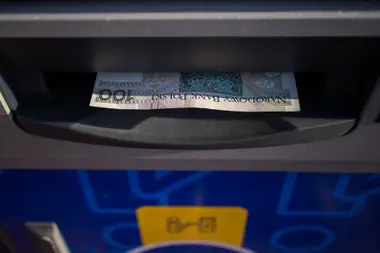
There is no crypto ATM at the Falmouth cruise pier, in Falmouth town, in Duncans, Clarks Town, Wakefield, Albert Town or Rio Bueno. Global machine registries list zero installations for Jamaica as a whole.
Falmouth is a genuinely interesting case for this question, because on paper it is the best location in Jamaica for a machine. Thousands of visitors arriving in a compact area on scheduled days, holding cash, in a country with no competing infrastructure. If passenger footfall alone decided these things, there would be a machine at the pier.
It does not, because the barrier is regulatory rather than commercial. A kiosk that accepts banknotes and delivers digital value is doing something adjacent to money transfer — an activity the Bank of Jamaica already licenses and supervises, applying fit-and-proper criteria to significant shareholders, directors and the compliance officer responsible for each location. There is no licence category for a crypto kiosk until the Virtual Assets Service Provider Act commences, and no credible operator installs cash-handling infrastructure in a Proceeds of Crime Act jurisdiction without one.
Our Bitcoin ATM investigation works through the licensing, the anti-money-laundering obligations and the projected pricing — which, for the record, would be roughly three to four times what a card costs.
A plan for each half of the parish
If you earn at the pier or in tourism. Open a US dollar account. Deposit dollars as dollars. Open one licensed exchange account. Buy a fixed amount on a fixed date, funded from the dollar balance. Keep an off-season reserve in cash. Move accumulated holdings to your own wallet a few times a year.
If you earn from farming or trade inland. Bank each lump on a monthly trip. Set the monthly crypto figure from an honest annual total. Buy on a fixed date from the account, not from the takings. Use the card route rather than peer-to-peer if your signal is unreliable. Keep the recovery phrase for your wallet in two separate places, at least one waterproof.
If you work at a resort on payroll. You are effectively in the salaried category, and the simplest version applies: one monthly card purchase, a fixed amount, from your phone. The plan in our Portmore guide is written for exactly that pattern.
Falmouth is the clearest illustration in Jamaica of why footfall is not the same as infrastructure. You can stand at that pier on a ship morning, surrounded by more foreign currency than most Jamaican towns see in a month, in a country with zero crypto ATMs — and the reason is a missing licence category rather than a missing customer. When people ask us why Jamaica has no machines despite obvious demand, Falmouth is the example we reach for.
Across the parish
Falmouth. The parish capital, its banking centre, and the cruise port. Everything requiring a counter belongs here, and cambios operate around the pier on ship days.
The cruise pier and the craft market. Where dollar cash concentrates and where informal offers are most likely. Treat any approach as you would a street financial offer anywhere.
Duncans and Rio Bueno. Coastal towns with agent and remittance presence, and the shortest routes east toward St. Ann.
Wakefield and Clarks Town. Inland market and agricultural districts, with the monthly-banking-trip pattern above.
Albert Town and the Cockpit Country fringe. The yam belt proper. Longest journeys, patchiest signal, and the part of the parish where a card-based online route replaces travel rather than merely being more convenient — much like St. Thomas.
The Montego Bay corridor. Many Trelawny residents bank or work in Montego Bay, which is the region's real financial centre. Ocho Rios serves the eastern end similarly.
Local risks
Counterfeit notes. A dollar-heavy visitor economy with high turnover is where counterfeits circulate. Accepting cash for crypto in person means taking that risk on an irreversible trade. Banking the money first passes it to a teller with a detector.
Passengers as counterparties. Selling crypto for cash to someone who sails that evening leaves you no recourse if anything is wrong. It leaves them none either, which is exactly why such trades attract people who prefer it that way.
Off-season pressure. The risky month is the quiet one. Schemes promising a fixed weekly return are most persuasive when income has stopped. If a return is guaranteed, or improves by recruiting others, it is not an investment — see our scams page for the eight red flags and the reporting routes.
Distance from recourse. The Financial Services Commission and the Financial Investigations Division are in Kingston. Keep evidence organised so a report can be made remotely rather than requiring travel.
Primary sources & further reading
The shortlist for Trelawny
Top 10 crypto exchanges usable from Trelawny
All ten onboard Trelawny residents. The filters that matter here are clean US dollar funding for the pier economy and reliability on a patchy connection for the interior — not a basis point of trading fee.
| # | Exchange | Why it makes the list | Cost from | Website |
|---|---|---|---|---|
| 01 | CEX.IO | First card purchase from a Jamaican bank | 0.15% spot | cex.io |
| 02 | Kraken | Low-cost spot trading and long-term holding | 0.25% spot | kraken.com |
| 03 | Binance | Deepest liquidity and JMD peer-to-peer | 0.10% spot | binance.com |
| 04 | Coinbase | Simplicity and corporate transparency | 0.40% spot | coinbase.com |
| 05 | Bybit | Active traders who want one app for spot and futures | 0.10% spot | bybit.com |
| 06 | OKX | Cheap maker fees and self-custody in the same app | 0.08% spot | okx.com |
| 07 | KuCoin | Early-stage and small-cap tokens | 0.10% spot | kucoin.com |
| 08 | Bitget | Copy trading and P2P in emerging markets | 0.10% spot | bitget.com |
| 09 | Crypto.com | A single mobile app with a spend card | 0.25% spot | crypto.com |
| 10 | Gate | Breadth of listings and niche pairs | 0.09% spot | gate.com |
Ranked by our composite score across access, true cost, supervision and exit. Spot fees are entry-tier published rates checked September 2026. Every link goes to the operator's own website and is nofollow.
Keep going
Guides that pair with Trelawny
Nearby: Montego Bay · Ocho Rios · St. Mary · every city and parish
FAQ